

Translating from English into European languages often makes content longer, and that affects everything.
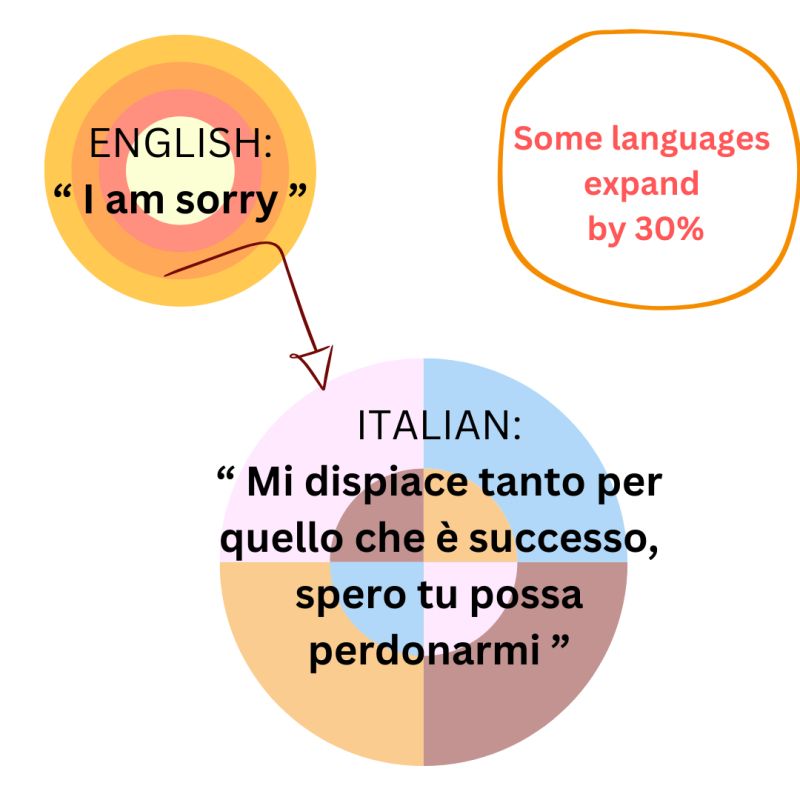
There is one aspect of localisation that catches clients off guard more consistently than almost anything else: text expansion.
When you translate from English into German, French, Italian, or Spanish, the content often becomes significantly longer. Sometimes by 20%, sometimes by 30% or more. That might sound like a minor detail, until you see what it does to a carefully designed layout.
Website buttons overflow. Packaging text no longer fits. Banner headlines break across two lines. PDF columns collapse. App interfaces that were perfectly balanced in English look broken in every other language.
This is not a translation error. It is a structural characteristic of European languages, and it needs to be planned for from the very beginning of any multilingual project.
At FB Language Solutions, I factor text expansion into every project that involves design or layout. This means considering character limits during the translation and localisation phase, flagging potential layout issues before they become problems, and working directly on the source files to adapt the design alongside the language.
Localisation is not only about meaning. It is about making sure the entire output: text, layout, and visual presentation works correctly in every target market.
If your next project involves multilingual design files, it’s worth having this conversation early. It will save significant time and cost further down the line.