

What happens beneath the surface of every project
A client once looked at a completed translation and said: “This seemed like a straightforward one.” And in a way, that’s the best possible outcome, because it means everything underneath worked exactly as it should.
What they didn’t see was the context analysis carried out before a single word was translated. The glossary created to ensure consistency across the entire document. The multiple translation options considered and discussed internally before settling on the right approach. The structural adaptations made where the source language simply didn’t map onto the target. The reviews carried out to check accuracy, tone, and consistency before delivery.
None of that is visible in the final file. It rarely is. And that’s precisely why translation can be misunderstood as a quick or simple task, because when it’s done well, the effort behind it doesn’t show.
This is also why I believe in being transparent with clients about what a project actually involves. When I put together a quote, I explain what’s included and why. Not to justify the cost, but because understanding the process helps clients make better decisions – about timelines, about what level of quality they need, and about what to expect at each stage.
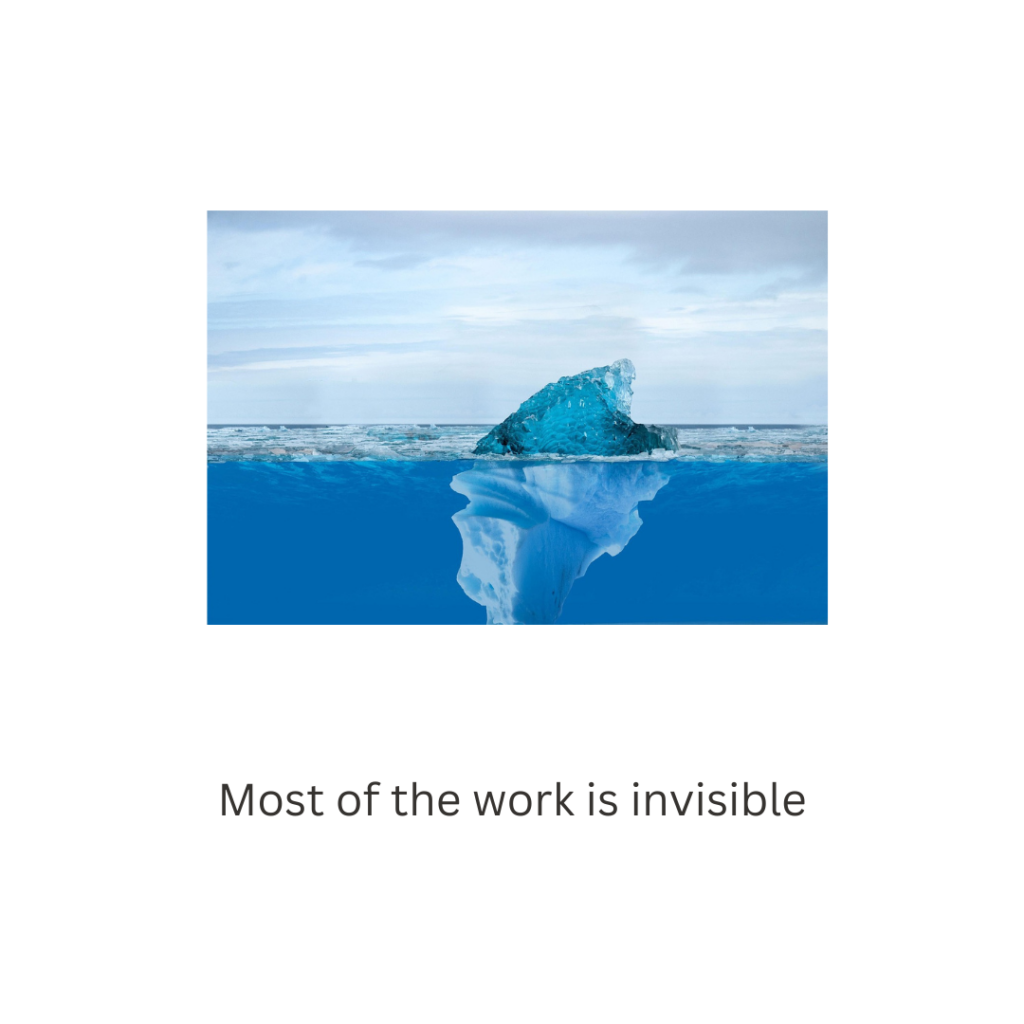
Translation is like an iceberg. The visible part can seem small, easy, and quick. The real work happens underneath. And it’s that work (the part no one sees) that ensures the part everyone reads is accurate, consistent, and right.